
Roofs, Furnaces, and Façades: What Three South Jersey Buildings Teach Owners About Capital Repairs
Three South Jersey stories from the past week put the same issue in front of building owners: what an older building needs to keep going, and who pays for it.
In Elmer, Appel Farm Arts & Music Center announced it is closing after 66 years. In its statement, the board of trustees pointed to falling funding and rising utility and insurance costs, and added that this "does not include the many capital requirements of an aging facility, such as new roofs, furnaces, and countless other needed repairs and refurbishments" (Appel Farm). In Atlantic City, the 1927 Carlton Apartments sold for $6 million, with "significant exterior masonry and façade work" in the plan (NJ.com). In Galloway, the vacant former Absecon Mills building was bought by a new owner who plans roof work, a refreshed façade and entry, and site improvements before offering it to a new user in early 2027 (ROI-NJ).
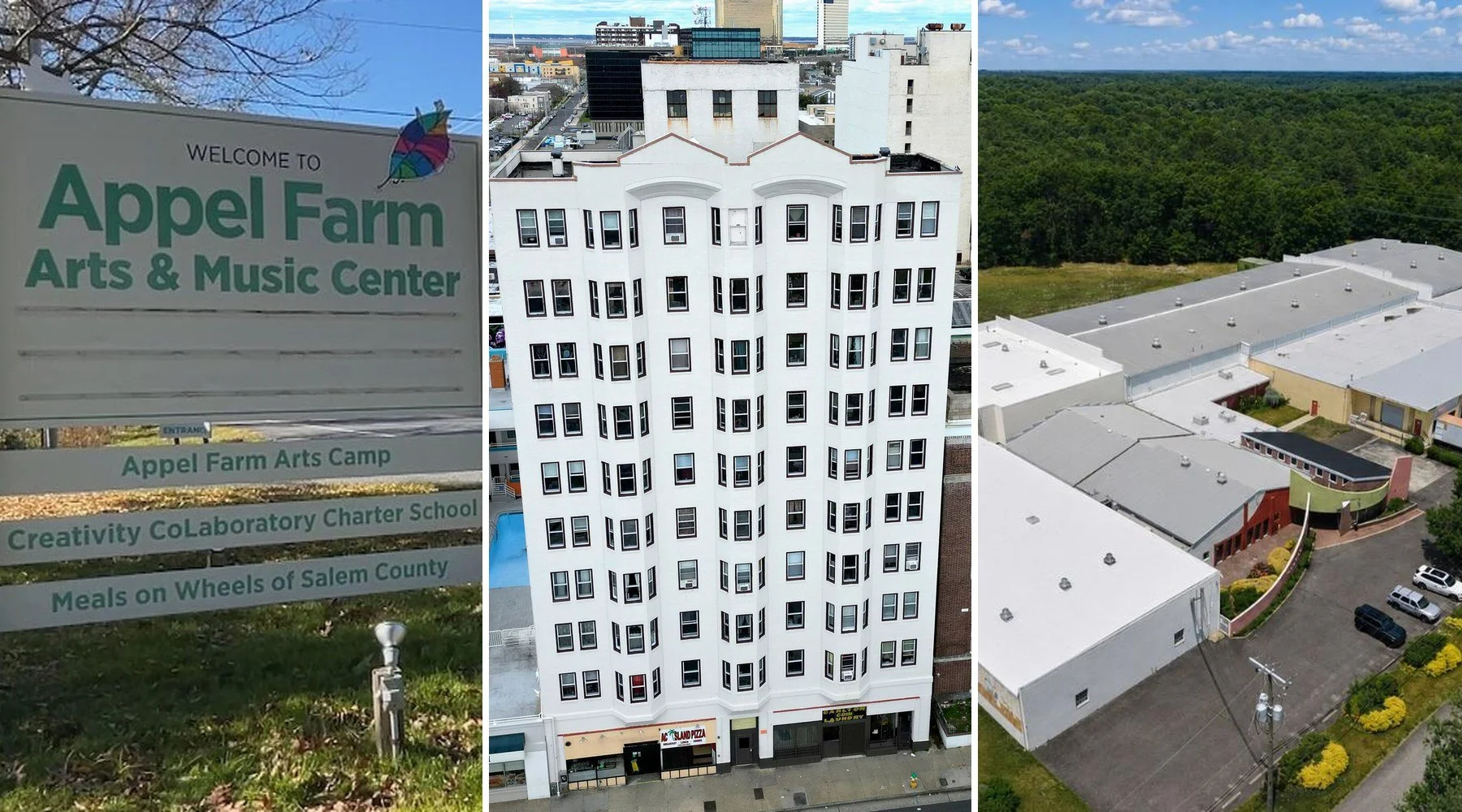
Left to right: Appel Farm Arts & Music Center sign, Elmer (video frame: CBS Philadelphia); Carlton Apartments, Atlantic City (photo: Hudson Atlantic, via NJ.com); 901 Aloe Street, the former Absecon Mills building, Galloway Township (photo: Barnegat Capital, via ROI-NJ)
Three different buildings, three different outcomes. The common thread is that roofs, mechanical systems, and exterior walls don't wait for a convenient budget year. Here's what each story shows, and what owners can do now.
What happened at each building
Appel Farm, Elmer (Salem County). Appel Farm began as a summer arts camp in 1960 on Albert and Clare Appel's 176-acre farm (The Inquirer). Over the last five years, the trustees wrote, "Individual, corporate, and foundation funding decreased, while day-to-day expenses like utilities and insurance drastically increased" (Appel Farm). The Inquirer reports the nonprofit took in more than $2.3 million and spent $2.6 million in its most recent fiscal year (The Inquirer). Executive director Heather Yelle told CBS Philadelphia, "The buildings have been here for 60-plus years," and "Utilities have gone up, and funding has gone down" (CBS Philadelphia). All programming has ended, including the camp (Appel Farm). The Creativity CoLaboratory Charter School on the property will stay open, according to CBS Philadelphia (CBS Philadelphia).
For a place that meant so much to so many families, this is a sad loss. It is also a reminder that an organization's mission can be strong and its buildings can still become a heavy weight.
Carlton Apartments, Atlantic City (Atlantic County). The 10-story, 82-unit building at 1329 Pacific Ave. was built in 1927 and sold for $6 million after more than 40 years under the same owner (NJ.com). Planned work includes renovations to the lobby and common areas, new carpeting, paint, LED lighting, a building-wide security monitoring system, and "significant exterior masonry and façade work," with plans to modernize the building "while preserving its 1920s character" (NJ.com).
Former Absecon Mills, Galloway Township (Atlantic County). The 101,000-square-foot masonry building at 901 Aloe Street sits on about 32 acres, three miles from Atlantic City International Airport. It housed Absecon Mills, a family-owned textile maker, from 1978 and was sold vacant (ROI-NJ). The buyer, Barnegat Capital, plans roof work, a refreshed façade and entry, and site improvements, then plans to offer it for lease or sale in early 2027 (ROI-NJ).
Notice what the two buyers put at the top of their lists: the roof, the façade, and the masonry. Those are the systems that keep water out and keep a building leasable.
What owners can do now
These tips apply whether you run a hotel, an apartment building, a commercial or industrial property, a school, a church, a nonprofit campus, or your own home.
1. Start with a building condition assessment. Have a design professional walk the whole property: roof, exterior walls, windows, foundations, and mechanical, electrical, and plumbing (MEP) systems. Ask for a written report that lists each component, its condition, its expected remaining life, and an opinion of cost. That report becomes the foundation for every decision that follows.
2. Put the building envelope first. Roofs, walls, flashing, and windows keep water out. When water gets in, it damages structure, finishes, and equipment, and small leaks become big repairs. If you have to choose, fix what keeps the building dry before you spend on finishes.
3. Know the age of your MEP systems. Furnaces, boilers, rooftop units, water heaters, and electrical service all wear out. Write down the install date of each major piece of equipment, and plan replacements before they fail in the middle of January or July. An emergency replacement leaves you little time to compare options or bundle the work with an efficiency upgrade.
4. Build a phased, multi-year capital plan. Turn the assessment into a schedule: what must happen this year, what can wait two to three years, and what's further out. Phasing spreads costs out, lets you bundle related work (for example, roof replacement with new rooftop equipment), and gives boards, lenders, and partners a clear picture.
5. Fund a reserve, and revisit it every year. A capital plan only works if money is set aside for it. Tie your annual reserve contribution to the plan, and update both as conditions and prices change. For nonprofits and institutions, a documented plan also gives donors and grantors a specific project to support.
6. Expect repairs to trigger permits and code requirements. Depending on the scope, roof, façade, and mechanical work may need permits, and larger renovations can bring code upgrades into play. Talk with your architect and your local construction official early, so those requirements are in the budget rather than a surprise.
7. Plan masonry and façade work with care on older buildings. For a building like the Carlton, the goal is to repair the exterior while keeping its character. Matching materials, mortar, and details takes planning, and that is easier to do on a schedule than during an emergency.
8. Account for coastal exposure. Buildings at the Shore and along the bays face wind, salt air, and moisture that are hard on roofs, masonry, sealants, and rooftop equipment. Inspect more often, choose materials suited to the exposure, and keep this in mind when you estimate how long each component will last.
9. Look at the whole cost of ownership. Appel Farm's trustees pointed to utilities and insurance alongside capital repairs (Appel Farm). When you plan a roof or a mechanical replacement, ask whether it can also lower operating costs, such as better insulation with a new roof or more efficient equipment.
10. Don't wait for a sale or a crisis. Both buyers in this week's stories had a plan for the envelope the moment they took ownership. Owners who plan ahead get to make those choices on their own timeline.
If you own an older building in South Jersey and want help with a condition assessment or a phased capital repair plan, we're glad to talk it through.
Richard Sanford, RA
Sources
Appel Farm Board of Trustees, closing announcement, dated Elmer, NJ, November 18, 2026: appelfarm.org
Sarah Nicell, "Appel Farm, the beloved South Jersey arts camp, is closing after 66 years," The Inquirer, Nov. 20, 2026: inquirer.com
Ryan Hughes, "Appel Farm Arts and Music Center, an oasis for the arts in South Jersey, closes after 6 decades," CBS Philadelphia, Nov. 20, 2026: cbsnews.com
Stephanie Loder, "Jersey Shore apartment building sells for $6M, ending 40-year era. Here's what's planned," NJ.com, Nov. 21, 2026: nj.com
ROI-NJ Staff, "Barnegat Capital acquires industrial building near Atlantic City International Airport," ROI-NJ, Nov. 20, 2026: roi-nj.com